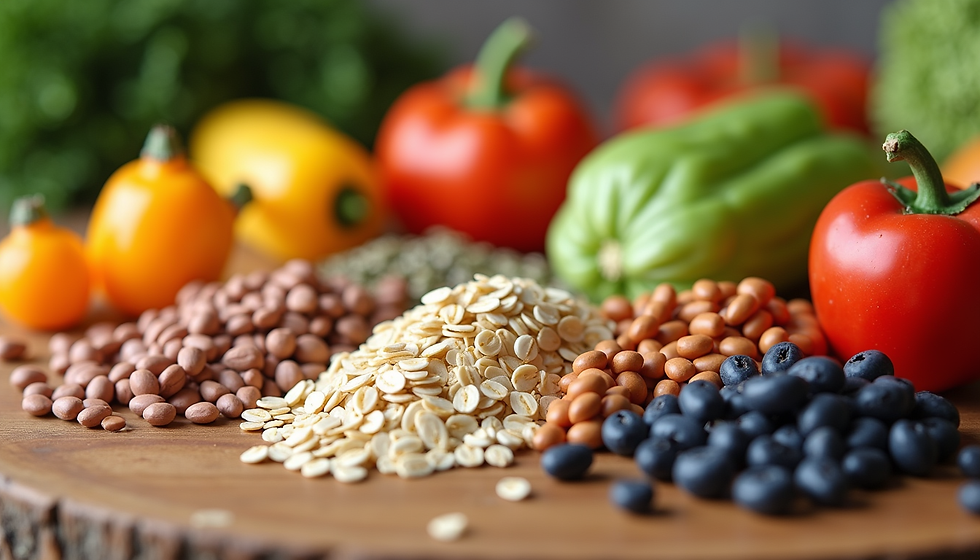


Part 3 of 3: The Human Gut Microbiome; The Key to a Healthy Gut

The Key to Healthy Gut Microbiome: Fiber
The amount of fiber we need each day varies by gender and condition, but a minimum or 25 grams, up to 38 grams per day is required for a healthy gut. Supplemental fiber is useful in reaching your goal but lacks the diversity of enzymes and synergistic components of fresh vegetables, grains and fruits. Supplemental fibers must be introduced slowly accompanied by plenty of water to prevent gas and bloating and prevent constipation. I’m sure your thinking-fiber is given for constipation- and you’d be correct. The way fiber works for constipation is adding bulk to the stool which increases peristalsis (intestinal movement). Without adequate hydration, the bulk becomes a clump blocking the way, instead of a softer lubricated form which moves through the colon. TMI?

Fresh veggies and fruits already have some water content. So, with a little more hydration,
you’re good to go!
Always try to get ORGANIC SOURCES-of course when available.
Remember, pesticides are destroyers of the gut microbiota.

Dietary fiber is one of the most powerful tools for supporting gut health.
Increasing fiber intake can rapidly improve microbial diversity,
sometimes within two weeks.
Remember a brief discussion about short-chain fatty acids (SCFAs) in Part 2?
More about Short-Chain Fatty Acids (SCFAs)
Dietary fiber feeds beneficial bacteria and promote production of short-chain fatty acids
SCFAs are beneficial compounds produced when gut bacteria ferment dietary fiber.
Important SCFAs include:
Butyrate
Propionate
Acetate
These various forms offer different benefits depending on type of health conditions
Their benefits include:
Providing energy for colon cells
Regulating immune responses
Reducing inflammation
Supporting metabolic health

Butter made from grass-fed, pasture-raised cattle that are free of hormones and antibiotics contains higher levels of naturally occurring butyrate.
Supporting SCFAs
What to Eat?
Prebiotic foods (insoluble fibers)
Jerusalem artichokes (sunchokes) available at health food stores and chain groceries in season.
Dandelion greens (available at health food groceries) these are larger than the yard variety…and YES, I do pick them out of my yard- for salads, shakes, sauteed with other greens, added to soups & mixed in grains.
Alums
onions, scallions, shallots, garlic, leeks
Asparagus
White peaches, apples, watermelon, berries
GREEN bananas and plantains-not ripe
Legumes
Chickpeas, lentils, beans, peas
Organic preferred- legumes highly treated with pesticides
Ancient & whole grains
Farro, einkorn, amaranth, spelt, bulgur, barley, quinoa, millet, sorghum, teff, freekeh, whole oats, brown- purple-black rices, wheat berries, buckwheat.
Ancient grains have been unmodified for thousands of years, tend to be higher in nutrients, may be cultivated with less pesticide if non-organic.
Available at your local grocery, health food markets or online.
Fiber-rich foods (soluble and insoluble)
Some vegetables listed are repeated as they offer multiple benefits
Nuts and seeds
Vegetable skins
Fruit skins
Red, Gold, Purple potatoes- Not Russet (high glycemic)
Sweet potatoes
Green leafy vegetables
Broccoli
Zucchini
Avocado
Berries
Apples
Pears
Plums
Fermentable fibers
Artichokes
Brussels sprouts
Chia seeds
Flax seeds
Cabbage
Fermentable foods- don’t provide fiber specifically but offer beneficial bacteria.
· Kombucha
· Sauerkraut (from cooler-not canned or jar on the shelf)
· Kimchi & other fermented vegetables
· Apple cider vinegar
· Naturally fermented plain yogurts; non-fruited
Resistant starches
Green bananas, plantains
Beans, lentils
Purple potatoes
Final Thoughts
You made it—the end of the trilogy.

It’s a lot of information I know, but it’s also incredibly important. Hopefully, you now have a clearer understanding of just how powerful the gut microbiome is, it's impact on your healthy and why caring for it matters.
Remember, just taking prebiotics and probiotic supplements don't fix the problem when the microbiota is not supported through diet and lifestyle. It's like trying to spit on fire- minimal impact - and it may even make it worse. You've heard the saying "too much of a good thing." It applies here. Supplements may offer benefit, but without behaviors which help the microbiome flourish, they may only worsen dysbiosis. Eating to supporting your gut microbiome, is by far one of the most impactful ways to promote whole-body health. As we've learned, microbes in your gut influence mood, immune function, metabolism, and inflammation, playing a role in how you feel today and how you age over time.
The good news is that supporting your microbiome doesn’t require anything extreme. Simple daily habits make a meaningful difference—eating fiber-rich foods that promote beneficial short-chain fatty acids (SCFAs), prioritizing restorative sleep, managing stress, staying physically active, and maintaining proper hydration.
When these foundational lifestyle practices become part of everyday life, they help nourish a resilient microbiome, reduce the risk of dysbiosis, and support long-term health, disease prevention, and healthy aging—no matter where you are starting today.
Thank you & Take care!
From The Professor,

Bibliography
(2023, August 18). Retrieved from Cleveland Clinic: https://my.clevelandclinic.org/health/body/25201-gut-microbiome
Achieving peak performance by boosting your gut microbiome. (n.d.). Retrieved from Mayo Clinic News: https://www.mayoclinichealthcare.co.uk/news/achieving-peak-performance-by-boosting-gut-microbiome#:~:text=Stay%20hydrated:%20Drinking%20plenty%20of,Make%20an%20appointment
Chen Y., X. J. (2021, June 19). Regulation of Neurotransmitters by the Gut Microbiota and Effects on Cognition in Neurological Disorders. Retrieved from PubMed: https://pmc.ncbi.nlm.nih.gov/articles/PMC8234057/#sec2-nutrients-13-02099
What is the vagus nerve?
(2025, Feb., 25). What is the vagus nerve? Feinstein's Institutes for Medical Research
Godman, H. (2023, July 18). Haalthy Aging & Longevity. Retrieved from Harvard Health Publishing; Harvard Medical School: https://www.health.harvard.edu/healthy-aging-and-longevity/healthy-gut-healthier-aging#:~:text=Eat%20a%20healthy%20diet,different%20diseases%2C%22%20Pawluk%20says.
Gut Microbiome. (2023, August 18). Retrieved from Cleveland Clinic: https://my.clevelandclinic.org/health/body/25201-gut-microbiome
Han Y, W. B. (2022, Nov. 9). PubMed. Retrieved from Journal of inflammation Research: https://pmc.ncbi.nlm.nih.gov/articles/PMC9656367/
Valdes, A. &. (2018). Role of the gut microbiota in nutrition ans health. British Medical Journal (BMJ), 36-44.